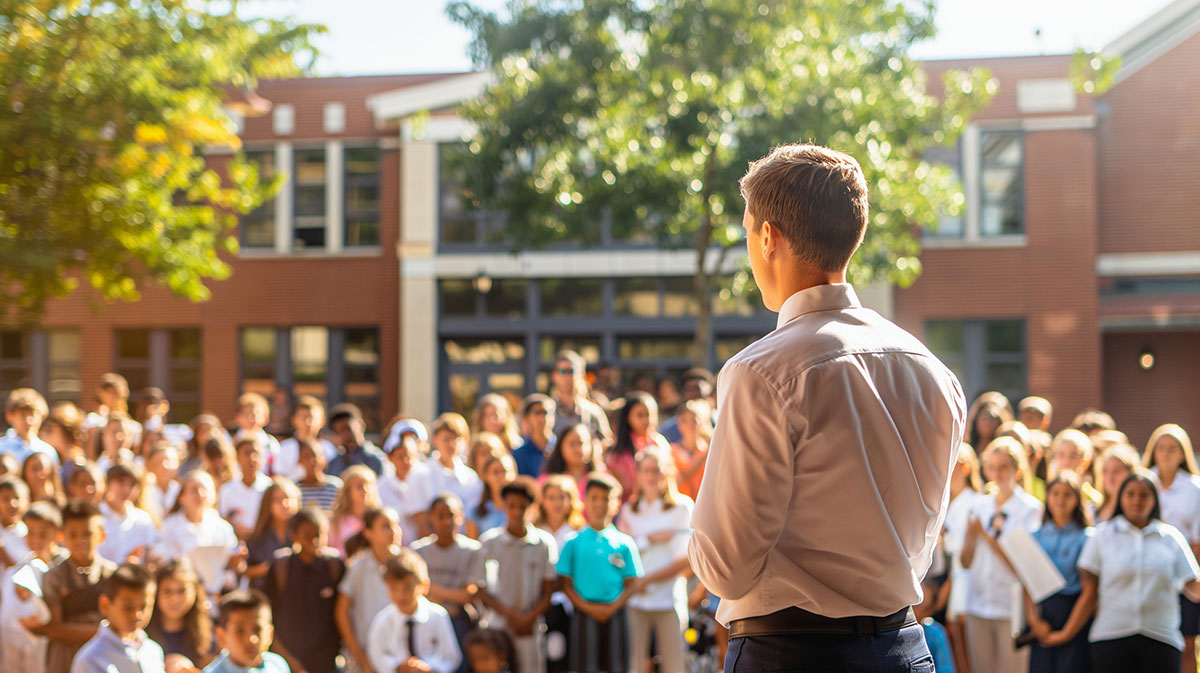
When most people think of school events, they picture assemblies, fundraisers, or athletic competitions. What they might not see is the incredible leadership potential these events hold. Over the years, I have learned that school events can be much more than celebrations or activities. They can serve as real-world leadership labs, providing opportunities for both teachers and students to step up, make decisions, solve problems, and build confidence.
As a principal, one of my responsibilities is not only to manage the day-to-day operations of a school but also to create opportunities for growth. School events are a natural platform for developing leadership skills because they require collaboration, planning, and accountability. They offer a safe environment where teachers and students can experiment, take risks, and learn from both successes and mistakes.
Empowering Teachers Through Ownership
Teachers are the backbone of any school, and giving them opportunities to lead outside the classroom can have a profound impact. When educators take ownership of a school event, they learn skills that extend far beyond lesson planning. Organizing a student showcase, planning a community service initiative, or coordinating a school-wide celebration requires project management, communication, and teamwork.
I have found that teachers thrive when they are trusted to make meaningful decisions. For example, when I asked a team of teachers to plan our annual literacy night, they were responsible for the schedule, activities, and promotion. Not only did the event succeed, but the teachers gained confidence in their ability to lead projects and coordinate colleagues. Experiences like these build leadership capacity and can prepare teachers for larger roles in the future, such as department chairs, instructional coaches, or administrative positions.
Developing Student Leaders
School events are equally powerful for students. When students are given responsibilities in planning or running events, they practice critical skills such as time management, problem-solving, and collaboration. These opportunities allow students to see firsthand how leadership looks in action.
For example, I have seen students organize food drives, coordinate pep rallies, and lead service projects for the community. In each case, they learned to communicate expectations, motivate peers, and handle unexpected challenges. More importantly, they learned that leadership is not about a title but about taking initiative and serving others. These experiences often translate into stronger classroom participation, improved confidence, and a greater sense of responsibility for the school community.
Creating a Structured Approach
While some leadership growth happens naturally, intentional planning ensures that every event becomes a leadership opportunity. I encourage schools to design a structure that clearly defines roles for teachers and students, sets expectations, and provides mentorship throughout the process.
For teachers, this might mean pairing experienced staff with newer colleagues to co-lead an event. For students, it could involve creating committees responsible for specific tasks such as logistics, promotion, or volunteer coordination. Providing guidance, feedback, and reflection opportunities ensures that participants learn from the experience and grow in meaningful ways.
Encouraging Collaboration and Innovation
One of the most valuable aspects of using events as leadership labs is the chance for collaboration. Teachers and students must work together across grade levels and disciplines to make events successful. Collaboration teaches negotiation, communication, and problem-solving, all of which are essential skills for future leaders.
I have also seen events spark innovation. When students and teachers are encouraged to experiment with new ideas, they often create programs or activities that have a lasting impact on the school. For example, a student-led cultural festival not only celebrated diversity but became an annual event because of the creativity and leadership shown during the first year.
Reflection and Growth
A critical part of turning events into leadership labs is reflection. After every event, I hold debrief sessions with both teachers and students. We discuss what went well, what challenges arose, and what could be improved in the future. Reflection allows participants to internalize lessons learned and apply them to new situations.
Reflection also reinforces a growth mindset. Students and teachers learn that setbacks are opportunities for learning rather than failures. They begin to understand that leadership is a journey, not a destination, and that each experience builds skills for the next challenge.
The Ripple Effect of Leadership Development
When principals use school events intentionally as leadership opportunities, the benefits extend beyond a single activity. Teachers become more confident in taking initiative in the classroom and school-wide initiatives. Students develop skills that prepare them for college, careers, and civic engagement. The entire school culture shifts toward empowerment, collaboration, and shared responsibility.
In my experience, schools that embrace this approach become more resilient and innovative. Leadership is no longer concentrated at the top but is distributed across the school community. Everyone has a role to play, and everyone feels valued for their contributions.
Conclusion
School events are more than fun activities or traditions. They are leadership laboratories where teachers and students can practice, experiment, and grow. As principals, we have the opportunity to create environments where these experiences are intentional, structured, and meaningful.
By empowering teachers with ownership, giving students responsibility, encouraging collaboration, and fostering reflection, schools can develop a pipeline of leaders ready to take on new challenges. The skills learned through leading an event, from communication and planning to adaptability and problem-solving, translate directly into stronger classrooms, more confident teachers, and engaged students.
Leadership is not learned solely through workshops or meetings. It is practiced in real-world situations, and school events offer a perfect setting for that practice. When we embrace this approach, we not only make our schools stronger today but also prepare the leaders of tomorrow.